
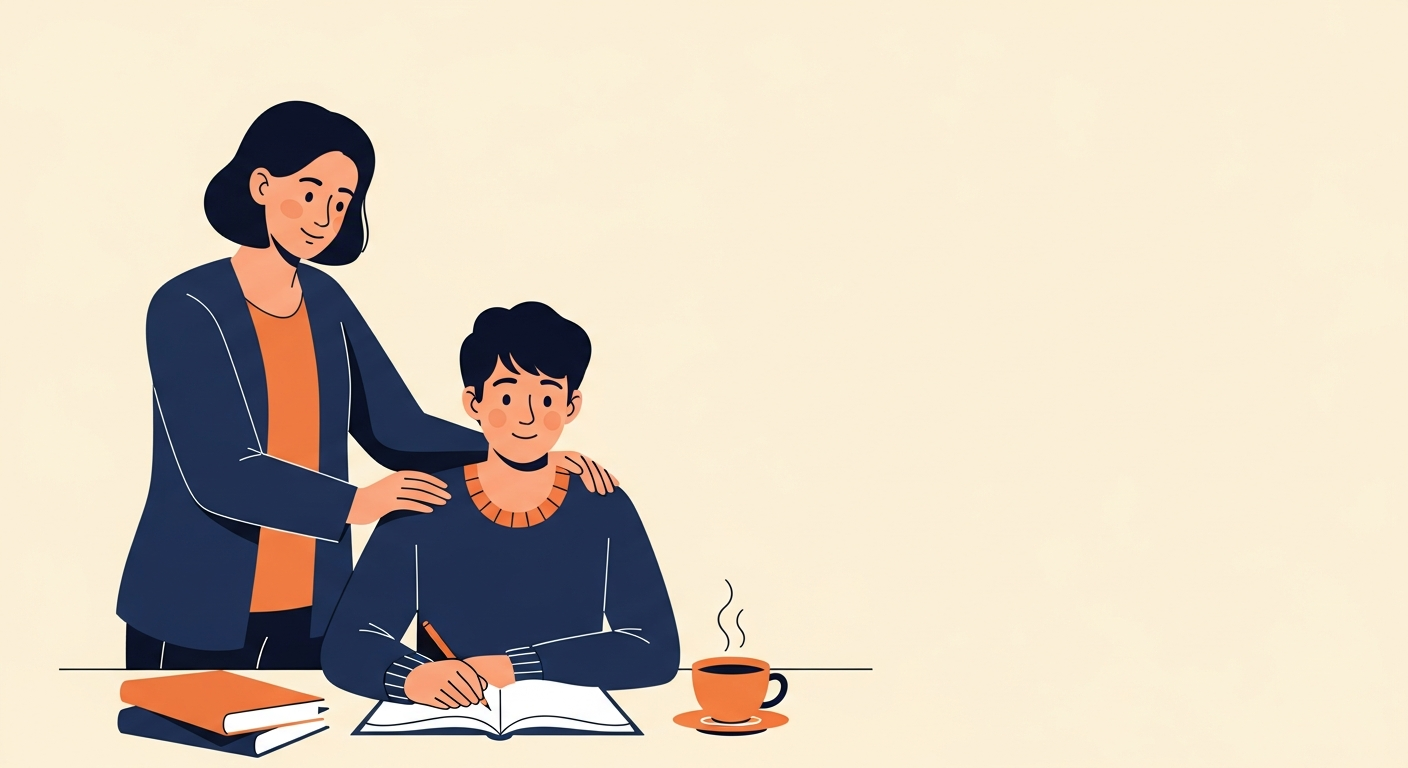
Exam season in Singapore is intense — not just for the child, but for the whole family. Parents want to help. They book extra tuition, print extra papers, and clear the schedule. But sometimes, the harder a parent tries, the more pressure the child feels.
HealthHub Singapore notes that parents play an important role in helping children prepare for exam season and manage stress, especially during periods of new responsibility and independence.
Why exam stress happens
Exam stress is not only about the exam. It is usually about what the child believes the exam means:
- “If I do badly, my parents will be disappointed.”
- “If I do badly, my whole future is ruined.”
- “If I do badly, I am not a smart person.”
These beliefs are heavier than the exam itself. They are also often picked up from how the adults around them talk, react, and worry.
What parents should avoid saying
These are well-meant but often backfire:
“If you don’t do well, you will end up nowhere.”
“Why are you still using your phone? Don’t you care?”
“Look at your cousin/classmate — why can’t you be like that?”
“You should be studying every minute now.”
Each one adds pressure without giving direction. The child hears: You are not enough yet.
What parents can say instead
“You’ve been working hard. Let’s figure out what to focus on tonight.”
“Whatever the result, we’ll work through it together.”
“I’m proud of how you’ve been showing up, not just of marks.”
“Take 10 minutes — then come back to it fresh.”
Notice the pattern: each line acknowledges the child, offers direction, and signals that the relationship is safe regardless of the result.
How to create a calm revision plan
Most exam stress comes from one feeling: there is too much to do and I don’t know where to start. A simple, visible plan removes that fog.
- List all topics with the child — on paper, not in their head.
- Rate each one: confident / shaky / weak.
- Spend most time on shaky topics, not weak ones (shaky improves fastest).
- Plan only 3–4 focused study blocks a day, not 8 vague ones.
- Build in short breaks and one full rest evening per week.
When the plan exists, the child can stop spending energy worrying about what to study and start spending energy actually studying.
Protect normal life
It is tempting to cancel everything — meals together, walks, exercise, weekends — in the name of revision. This usually makes things worse. Children need anchors of normality to stay emotionally steady. A 30-minute walk after dinner, or a simple home-cooked meal, can do more for focus than another hour of staring at notes.
When stress becomes too much
Watch for signs that stress has moved beyond healthy levels:
- Trouble sleeping, or sleeping far too much
- Tears or anger over small things
- Saying things like “I can’t do this” or “What’s the point”
- Frequent stomachaches or headaches
If these last more than a week, slow down. Talk to the form teacher. Speak to a counsellor or GP if needed. No exam is more important than a child’s mental health.
Parent takeaway
You cannot remove exam stress completely. But you can decide what kind of presence you want to be in the house during this season. Calm parents create calm households. Calm households produce better thinking.
At ADA Tuition, we help students prepare for exams with clearer understanding, stronger confidence, and healthier learning routines — so the pressure stays where it belongs: on the work, not on the child.
← Back to The Journal