
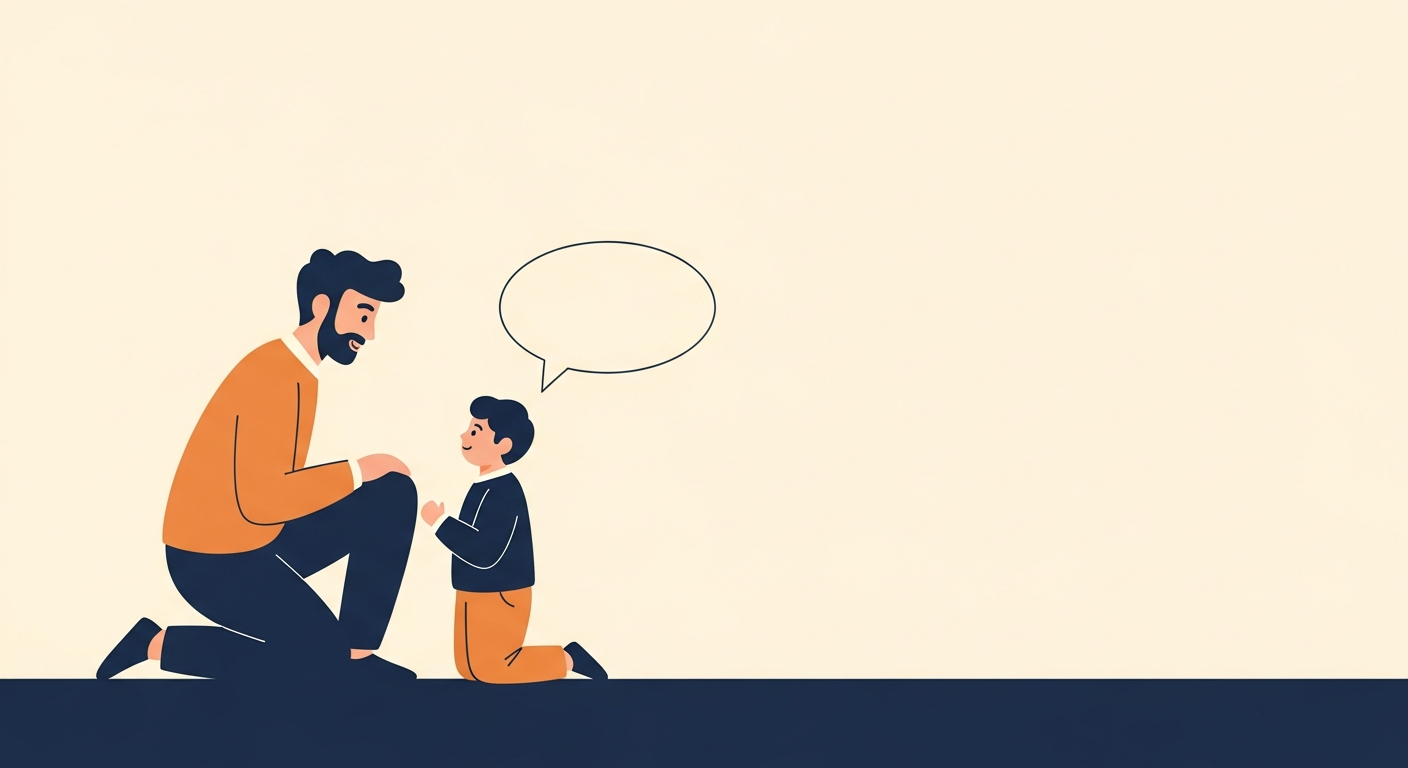
Almost every parent has hit this wall. You ask your child a simple question — about their day, about a homework question, about how they feel — and the answer is the same three words:
“I don’t know.”
It feels frustrating. It can feel dismissive. But most of the time, “I don’t know” is not the full answer. It is the polite, safe version of something the child finds harder to say.
“I don’t know” can mean many things
Depending on the moment, it usually means one of:
- “I’m tired and don’t want to think right now.”
- “I think I know, but I’m afraid of being wrong.”
- “I don’t know how to put it into words yet.”
- “I do know, but I don’t want to talk about it.”
- “If I say the wrong thing, I’ll get scolded.”
Treating all of these the same way (with frustration) makes the child even less likely to open up next time.
Why children fear giving wrong answers
In school, wrong answers often come with consequences — embarrassment, red marks, sometimes ridicule from classmates. Over time, many children learn a simple survival rule: if I’m not sure, say nothing.
At home, the same instinct kicks in. “I don’t know” is safer than guessing and being told they’re wrong.
How to ask better guiding questions
Instead of repeating the same question more firmly, try smaller ones that lower the stakes:
“What part do you understand so far?”
“If you had to guess, what would you guess?”
“What does this word mean to you?”
“Where do you usually get stuck on this kind of question?”
These questions tell the child: you don’t need the perfect answer. You just need to start somewhere.
How to listen first
HealthHub Singapore advises parents to take time to listen to their child’s feelings, thoughts, and needs before offering solutions, because this helps children feel heard and understood.
In practice, that means resisting the urge to fix things immediately. If a child says “I don’t know” about school, try:
“That’s okay. Want to just tell me one thing that happened today — anything?”
You will often find that once one small thing comes out, more follows.
Build confidence in answering
Confidence in speaking comes from small wins. Praise the attempt, not just the correct answer:
- “That was a good guess, even if it wasn’t quite right.”
- “I like how you explained your thinking.”
- “That’s a smart question — let’s figure it out together.”
The goal is to make “trying” feel safe again. Once trying feels safe, “I don’t know” slowly turns into “I think it might be...”.
How tutors can help identify hidden gaps
Sometimes “I don’t know” really does mean “I don’t know.” In that case, the child is not being difficult — there is a real concept gap, and they don’t have the vocabulary or foundation to explain it. A good tutor can spot exactly where the gap is and patch it, which often dissolves the “I don’t know” pattern within a few weeks.
Parent takeaway
When your child keeps saying “I don’t know,” try not to hear refusal. Hear a quiet request: make it safer for me to try.
At ADA, we create a space where children can try, make mistakes, and slowly find their voice again. Most of the time, that’s where real learning begins.
← Back to The Journal