
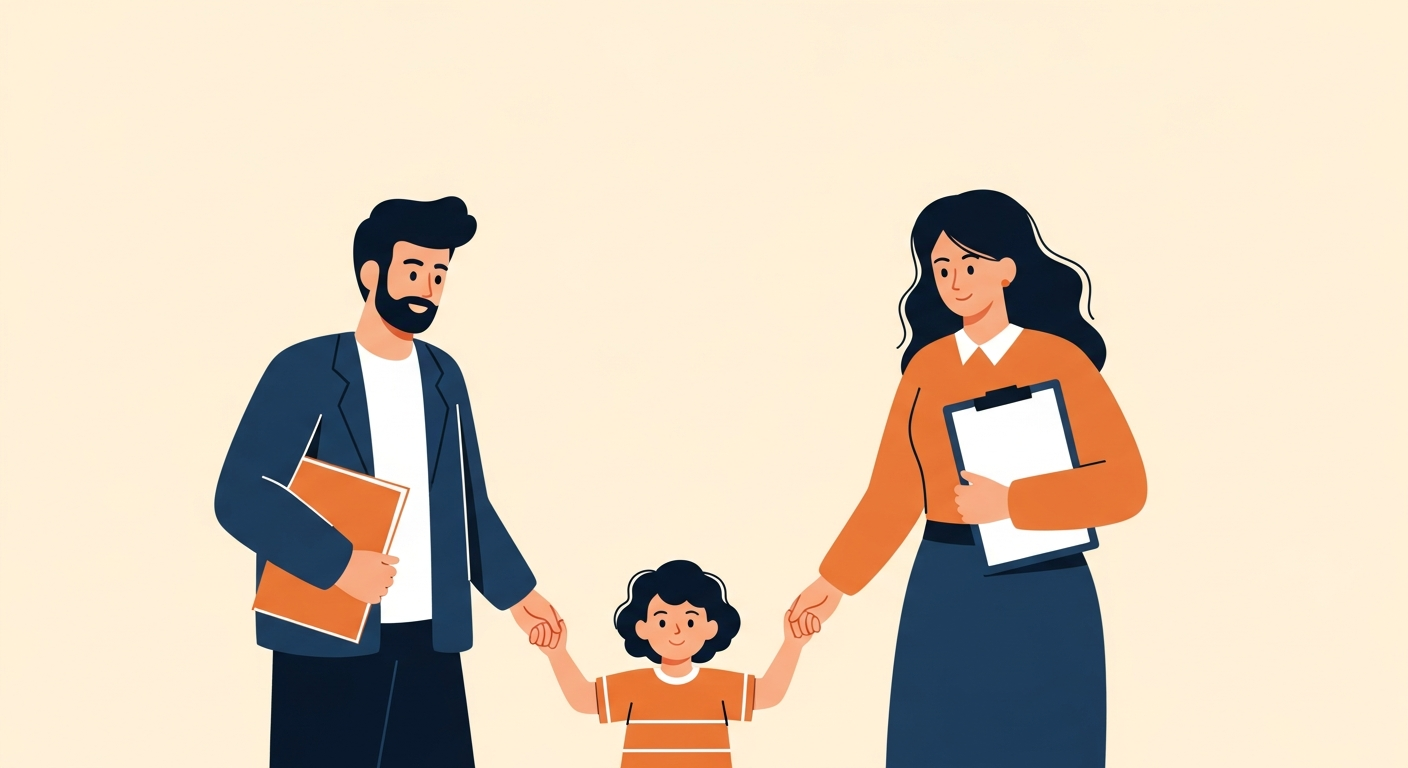
One of the most under-appreciated reasons children improve quickly is also one of the simplest: the adults in their life are talking to each other.
When parents, school teachers, and tutors all see the same patterns and reinforce the same expectations, the child has fewer mixed signals and faster progress. When they don’t, the child often gets caught between three different views of what “doing well” means.
MOE itself states that it seeks parents’ support to work in partnership with teachers to encourage children to develop at their own pace, and to support their mental and physical well-being.
Why children need consistent adult support
Children are remarkably good at noticing inconsistency between adults. If a teacher emphasises showing working, but a parent only checks the final answer, the child learns that showing working is optional. If a tutor encourages slowing down, but a parent rewards speed, the child gets confused about what they’re supposed to value.
None of these adults are wrong on their own. They’re just not aligned. And the child pays the cost.
What parents notice at home
Parents see things that no teacher ever will:
- How long the child actually takes to do homework
- Which subjects cause arguments or tears
- What time the child sleeps
- How focused they are at the end of a long day
- What they say about school when no one’s watching
This is gold. A teacher or tutor who knows these things can make far better decisions about how to support the child.
What tutors notice during lessons
Tutors, especially in small-group settings, see things parents rarely get to see:
- Where the child hesitates on a specific type of question
- How the child responds when corrected in front of peers
- Whether confidence has shifted week to week
- What the actual concept gap is (often very specific)
- How the child works under mild time pressure
When this information flows back to parents, the family stops guessing and starts focusing.
How communication helps identify patterns
A single bad mark doesn’t tell you much. But three adults comparing notes can spot a pattern fast:
“He’s fine in class but melts down on the test.” — teacher
“He keeps saying his stomach hurts on test days.” — parent
“He gets every question right when we go through it together later.” — tutor
Put together, those three observations point to test anxiety, not lack of knowledge. The fix is completely different.
How to create a simple improvement plan
You don’t need formal meetings. A simple, light-touch rhythm works:
- Once a term, share the school report card with the tutor.
- Once a month, ask the tutor what they’re focusing on and why.
- Once a week, ask the child one specific question about a topic.
- Whenever a meltdown or breakthrough happens, mention it to one of the adults.
This costs almost no time, but it dramatically increases the chance that everyone is rowing in the same direction.
What good tuition communication looks like
Good tuition centres don’t treat parents as customers to be billed and quietened. They treat parents as partners. That means:
- Telling you what your child actually worked on, not just “today was good”
- Flagging concerns early, before they become exam disasters
- Sharing what you can do at home to reinforce a lesson
- Being honest about progress, not just optimistic
This is the kind of partnership we try to maintain at ADA.
Parent takeaway
A child improves faster when the adults around them communicate and move in the same direction. The conversations don’t need to be long or formal. They just need to happen.
At ADA Tuition, we believe education works best when parents, students, and teachers are on the same team — with the same picture of the child.
← Back to The Journal