
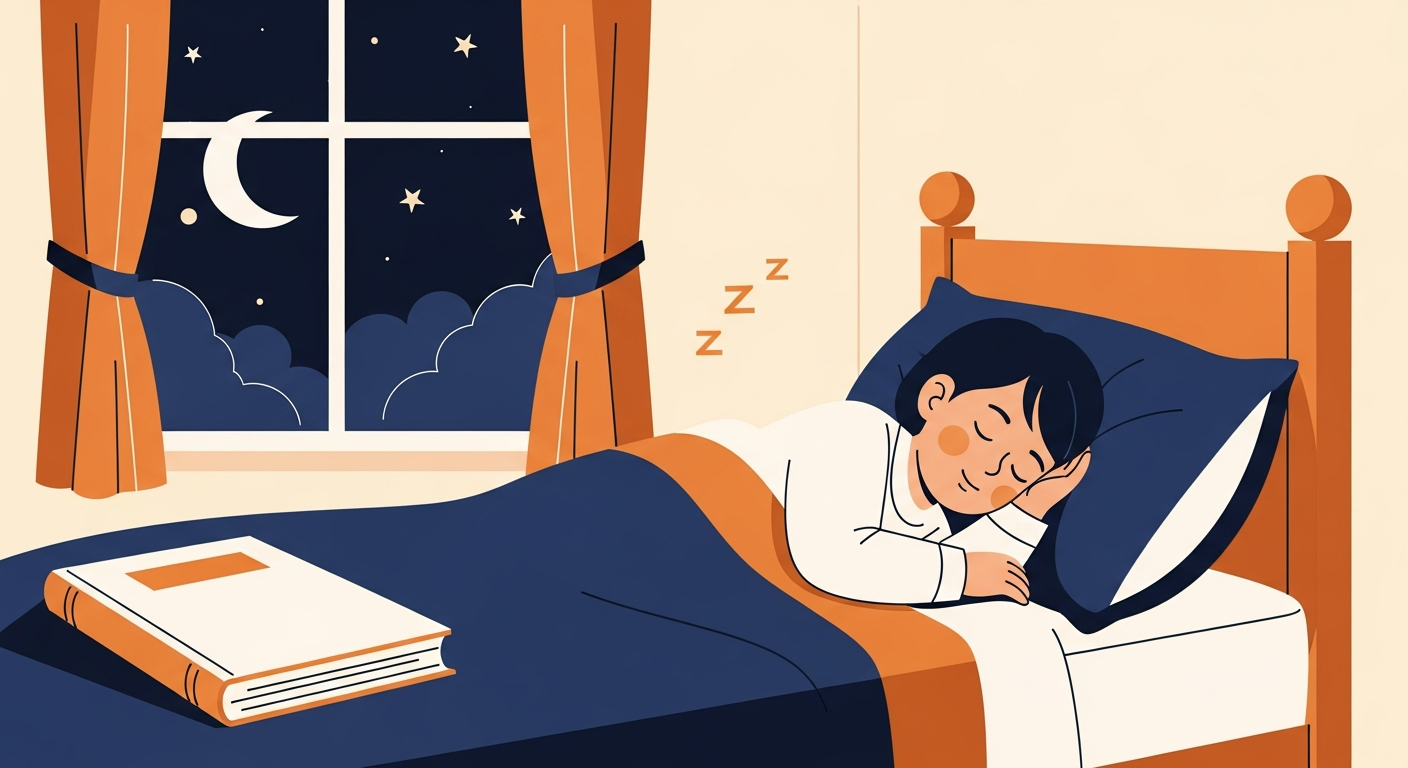
During exam season, many parents in Singapore see their child stay up later and later. The thinking feels logical: more hours awake = more hours to study. But the brain does not work that way.
HealthHub Singapore explains that sufficient sleep helps children feel their best and learn better, and that parents play an important role in helping them build consistent bedtime routines. Sleep is especially important for teenagers, whose bodies and brains are still developing.
Why tired children cannot focus well
A tired brain looks awake on the outside but works much more slowly on the inside. Reaction time slows down. Reading the same paragraph takes longer. Mistakes increase. Small frustrations become big ones.
This is why a child who studies until midnight often produces lower-quality work than the same child studying for 90 focused minutes earlier in the evening.
Why late-night cramming is not always effective
Cramming feels productive because the desk is full and the highlighter is moving. But late at night, two things happen:
- The brain is less able to form new memories.
- Reading and re-reading replace active recall, which is the part that actually builds learning.
Many children who cram before a test report a strange feeling the next morning: “I studied a lot, but I can’t remember any of it.” That is not a discipline problem. That is a sleep problem.
How sleep supports memory
One of the brain’s most important jobs during sleep is to take what was learned during the day and store it properly in long-term memory. Without enough sleep, that storage process is incomplete.
So when a child studies hard but skips sleep, they often lose the very thing they tried to gain. Sleep is not the opposite of studying. It is the second half of studying.
What parents can do before exam periods
Parents do not need to become strict sleep enforcers. Small, consistent changes work better than dramatic ones:
- Set a soft “screens off” time at least 45 minutes before bed.
- Charge phones outside the bedroom.
- Keep the room cool, quiet and dim in the last hour of the day.
- Avoid heavy snacks or sugary drinks late at night.
- Protect a fixed wake-up time even on weekends — large swings make weekday mornings harder.
A simple school-night routine
An example that works for many primary and lower-secondary students:
9.00 pm: Finish all study/homework
9.15 pm: Shower, pack bag for tomorrow
9.30 pm: Quiet time (reading, light chat with parent)
10.00 pm: Lights out
The routine matters more than the exact times. The brain learns to wind down when the same sequence happens every night.
When exam stress disrupts sleep
If your child cannot fall asleep because of worry, do not dismiss it. Sit with them for five minutes. Let them say what is on their mind. Often, the worry shrinks once it is spoken out loud.
Parent takeaway
If your child is studying hard but not improving, look at how they are sleeping. Rest is not laziness. Rest is performance. A well-rested child learning for 45 minutes a day will, over a few weeks, beat a tired child cramming for hours.
At ADA Tuition, we tell parents this often: better learning is not only about more worksheets. It is about helping the child build healthier study habits — and that includes sleep.
← Back to The Journal