Our Locations:
WEST BRANCH
273 Bukit Batok East Ave 4, #02-78, Singapore 650273
NORTH BRANCH
156 Yishun Street 11 #02-112 Singapore 760156
Email: hello@adatuition.com
Phone: (65) 9143 1143

We reach the heart before we teach the mind.
Our education philosophy begins with understanding the student, not judging the grade. We listen to their concerns, build trust and help them feel safe enough to ask questions, make mistakes and try again.
That connection makes targeted teaching more effective: students are more willing to reveal what they do not understand, act on feedback and practise consistently. We then repair gaps in foundational knowledge, build independent problem-solving skills and develop the accuracy and exam technique needed to turn understanding into marks.
Substantial grade improvements can come from this combination of confidence, focused teaching and sustained effort—not encouragement alone. Progress varies with each student’s starting point and learning needs. Read how our philosophy supports better grades.
Many students in Singapore work hard but still feel stuck.
They may doubt themselves, shut down emotionally, or feel constant pressure at home.
We noticed a common pattern:
That is why ADA was built differently. We focus on the root causes first, then guide students towards academic success with purpose.
ADA provides Primary and Secondary tuition in English, Mathematics and Science, including Secondary E-Math, A-Math, Combined Science and Pure Sciences.
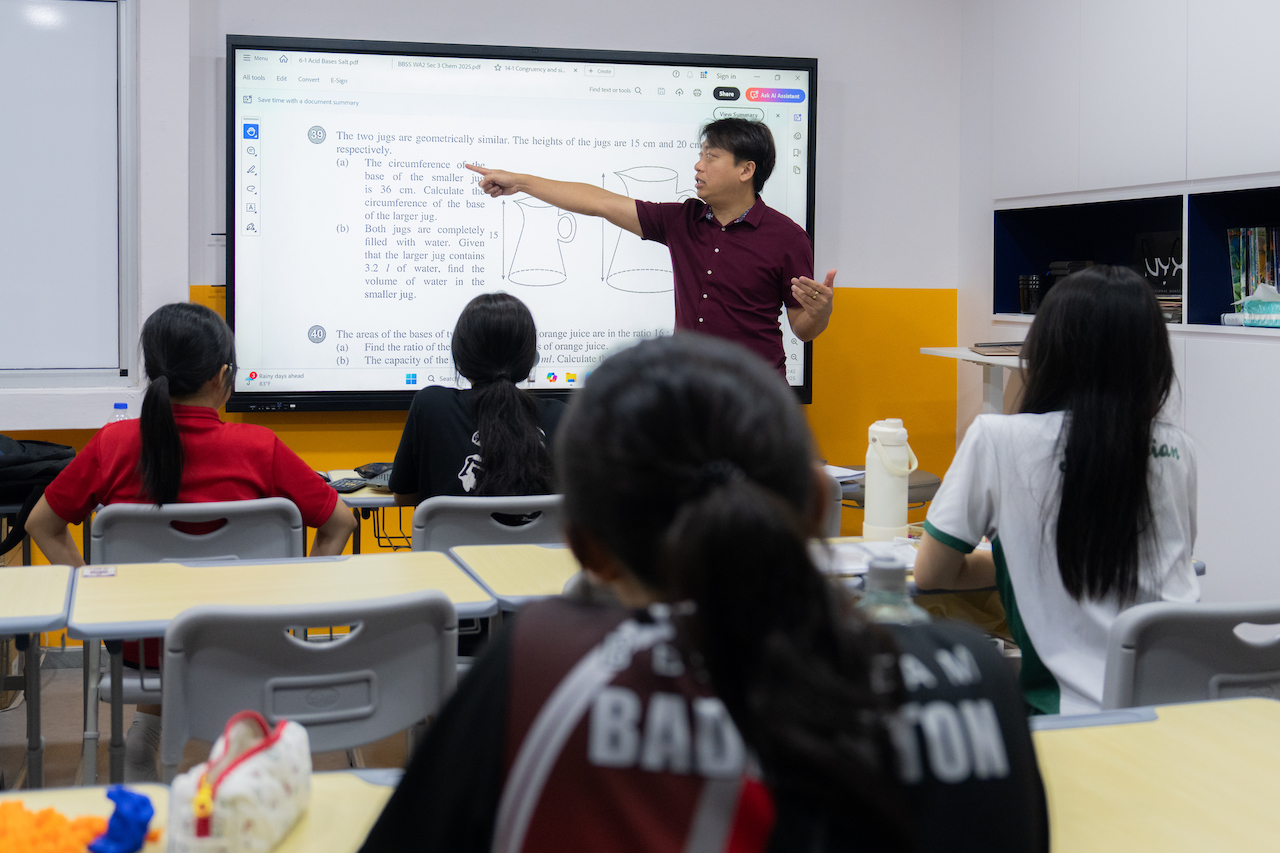
From 2027, our weekly regular tuition lessons will be 2 hours long. In each lesson, we do more than correct misconceptions. We explain concepts in simple, accessible ways and share practical tips to help students understand and remember the key principles. Guided practice gives them opportunities to apply what they have learnt, while constructive feedback helps them recognise what they are doing well and what to improve next.
We reach the heart before we teach the mind. By building trust and helping students experience gradual improvements in their understanding and skills, we nurture a more positive attitude towards learning. Students become more willing to ask questions, attempt challenging work and learn from mistakes.
As their competence and confidence grow together, students are better equipped to work towards stronger grades and academic excellence. Our aim is lasting progress through clear teaching, purposeful practice and consistent encouragement, rather than pressure alone.
We do not believe in labelling students as weak or slow.
Instead of asking what is wrong, we ask what support is missing.
Every child is a seedling: With the right environment, encouragement, and guidance, that seedling can grow.
Our role is to create the conditions for that growth to happen.

To understand what is really happening beneath the surface, we:

What families experience:

Over time, we work on:
Real confidence takes time to build. Phase 2 is where consistent mentorship makes the difference.

We then give parents simple, practical actions they can apply immediately. These may include:

Many parents want the best for their child, but stress and fear can shape how they communicate.
At ADA, we actively guide parents to:
Sometimes, the most powerful shift is reminding parents that their role is simple and meaningful. Provide safety, nourishment, and unconditional love.
When parents change how they respond, children change how they behave.
Students are more motivated when they understand why they are studying.
We help them make sense of:
When goals feel real and achievable, students begin to take ownership of their learning.
Students are more motivated when they understand why they are studying.
We help them make sense of:
For many students, ADA becomes a stable place where they feel understood and supported when they need it most.